Best Red Light Areas in Mumbai – Key Locations
Curious about Mumbai's red light areas? Discover the most well-known districts, their history, safety tips, legal context, and what US travelers should expect
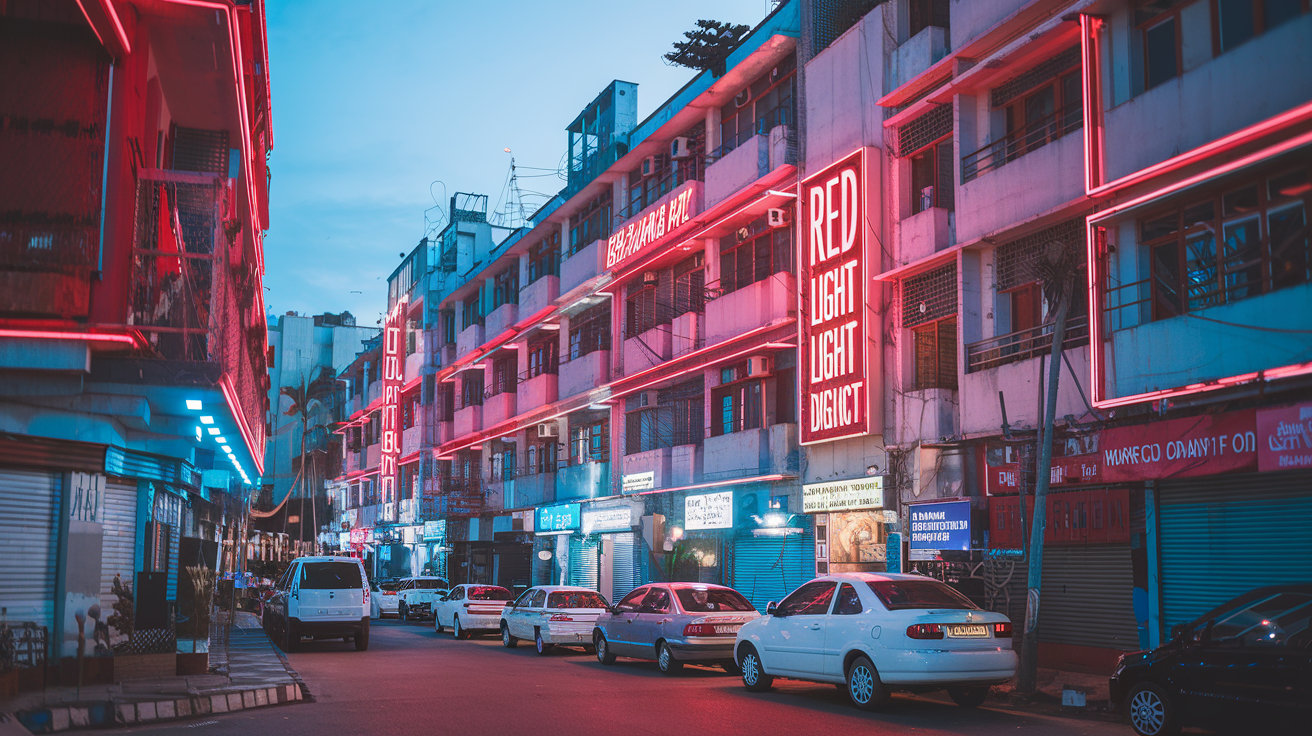


Mumbai is a city of extremes. Bollywood glamour, colonial architecture, street food, and a nightlife scene that runs all night.
But there's another side of the city that draws researchers, journalists, documentary makers, and curious travelers every year. Mumbai's red light districts are some of the oldest and most historically significant in all of Asia.
For American visitors, the cultural and legal context here is very different from back home. Understanding what you're walking into is essential before you go.
This guide covers the major red light areas in Mumbai, their history, what to expect on the ground, and how to visit responsibly if that's your intent.
Key Takeaways
Kamathipura is the most famous red light district in Mumbai, and one of Asia's oldest, dating back to the 1800s.
Prostitution is legal in India, but related activities like running a brothel or soliciting in public remain regulated.
Sex tourism is not the intent of this guide. Many visitors go for documentary, research, journalistic, or educational purposes.
Safety varies by area and time of day. Daytime visits to most areas are significantly safer than nighttime.
NGOs actively operate in all major Mumbai red light areas, providing health and legal services to sex workers.
Trafficking is a serious issue. Many women in these areas have been trafficked, and ethical awareness matters.
What "red light area" means in Mumbai
The term refers to neighborhoods or specific streets where sex work is concentrated and visible.
In Mumbai, these areas are not officially zoned or state-sanctioned. They evolved historically around labor migration, colonial port trade, and urban poverty.
"Mumbai's red light districts are less a government policy and more a geography of economic desperation, historical drift, and institutional neglect."
Unlike the Netherlands or Nevada, India doesn't regulate these zones formally. They exist in a legal gray area.
Is prostitution legal in India?
This is the first question most American visitors ask. The short answer: it's complicated.
Activity | Legal Status in India |
Selling sex (consensual adult) | Legal |
Running a brothel | Illegal |
Soliciting in public | Illegal |
Sex trafficking | Illegal (IPC Section 370) |
Living off a sex worker's earnings | Illegal (pimping) |
The legal framework comes from the Immoral Traffic Prevention Act (ITPA) of 1956.
Sex work itself is technically permitted, but nearly every activity around it is not. That creates a situation where workers operate with constant legal vulnerability.
Best known red light areas in Mumbai
1. Kamathipura
Kamathipura is Mumbai's most famous red light district, and one of the oldest in all of Asia.
It is located in South Mumbai, near Grant Road station on the Western Railway line. The area stretches across 14 numbered lanes, though most commercial activity now concentrates in just two or three.
History: Kamathipura took shape in the late 18th century as Mumbai expanded into a British colonial port. The area was first settled by Telugu-speaking construction workers known as "kamathis" who migrated from Hyderabad, joined by Marathi, Gujarati, and North Indian laborers, creating a multi-cultural enclave.
Scale at peak: The number of workers dwindled from approximately 45,000 in 1992 to just 1,600 by 2009, with further reduction to around 500 in 2018, when the BMC announced plans to revamp the entire 39 acres.
What it looks like today:
Narrow, dense lanes with old colonial-era buildings
Many former brothels now house small factories, bag makers, and scrap dealers
A few lanes still remain active in sex work
NGOs and health workers are a visible presence
Kamathipura is known as Mumbai's oldest and Asia's second largest red light district, originally known as Lal Bazaar before taking its current name from the kamathi workers who settled there after 1795.
Best for: Documentary travelers, researchers, social workers, urban history enthusiasts.
2. Grant Road and Falkland Road
These two areas sit adjacent to Kamathipura and together form a larger red light corridor in South Mumbai.
Falkland Road is situated near Grant Road station and is a well-known red light district in Mumbai, filled with inexpensive lodges and hotels, and is frequently visited by travelers and business personnel.
The area has been featured in multiple international documentaries and books, including Mary Ellen Mark's famous 1981 photography series Falkland Road.
What to know:
Accessible by local train to Grant Road station
More street-level activity than Kamathipura in many stretches
Mix of residential buildings and commercial lodges
Police presence is moderate
3. Foras Road
Foras Road is located close to the Grant Road corridor and is often grouped with the Kamathipura district.
It is less visited by outsiders than Kamathipura but is considered a significant part of the same zone.
The area has a high density of establishments operating across several buildings, with workers from multiple Indian states and, historically, Nepal and Bangladesh.
4. Garib Nagar (Bandra)
Garib Nagar is situated in the northwestern part of the city near the railway tracks, and is known for prostitution and drug trade, with sex workers from different parts of India.
This area is notably different from Kamathipura in character. It's a slum-adjacent neighborhood rather than a concentrated lane system.
Key differences from Kamathipura:
Less tourist-facing
More informal setup
Higher drug-related activity in adjacent zones
Less NGO infrastructure compared to South Mumbai
5. Ghatkopar
Ghatkopar is a large red light area located in the eastern suburbs of Mumbai.
This area has approximately 1,500 sex workers, and Ghatkopar red light area is also locally referred to as "prostitute lanes."
Unlike Kamathipura, Ghatkopar doesn't have significant colonial-era history. It developed more recently, partly absorbing workers displaced from central Mumbai.
It is less known to tourists and operates more quietly within its residential suburban context.
6. Turbhe Tekdi (Navi Mumbai)
Turbhe Tekdi is located near Turbhe Railway Station in Navi Mumbai, just outside Mumbai's city limits.
The Mumbai red light area in Turbhe has been a small lane, near the Turbhe Railway Station, much in the vicinity of a hilltop. A slum area, Turbhe Tekdi became a go-to place for sex workers due to the affordability factor, with many women migrating here from Kamathipura as demolitions and redevelopment raised prices in central Mumbai.
This area is not typically part of a tourist or research itinerary. It caters primarily to local clientele.
Red light areas in Mumbai: quick comparison
Area | Location | Character | Visitor Type |
Kamathipura | South Mumbai (Grant Road) | Historic, shrinking, well-documented | Researchers, journalists, tourists |
Falkland Road | South Mumbai (Grant Road) | Street-level, active, mixed | Travelers, documentary makers |
Foras Road | South Mumbai | Dense, informal | Social workers |
Garib Nagar | Bandra (Northwest) | Slum-adjacent, informal | Local focus |
Ghatkopar | Eastern suburbs | Suburban, residential | Rarely visited by outsiders |
Turbhe Tekdi | Navi Mumbai | Slum, low-profile | Primarily local |
Safety tips for visiting Mumbai red light areas
If you're visiting for research, journalism, photography, or cultural education, here's what matters.
Before you go
Go in the daytime. Most areas are significantly safer before dark.
Don't go alone. A local guide or NGO contact makes a major difference.
Leave valuables at the hotel. Pickpocketing is common in dense lane environments.
Inform someone of your itinerary. Basic safety practice in any unfamiliar urban setting.
On the ground
Do not photograph people without permission. This is ethically non-negotiable and can provoke a strong response.
Dress conservatively. This isn't a tourist destination in the conventional sense.
Don't engage commercial services. This should be obvious, but the risk of exploitation, trafficking, and disease is real.
Respect NGO workers. They operate under difficult conditions. Don't interrupt their work.
Regarding sex workers specifically
These are real people, not an attraction. Many are trafficking victims. Your presence should never add to exploitation.
What US travelers should understand about the legal context
American visitors operate under US laws even abroad in certain cases. The PROTECT Act (2003) makes it a federal crime for US citizens to engage in commercial sex with minors anywhere in the world.
For adults: India's legal gray area does not protect Americans from US federal anti-trafficking statutes.
Key legal considerations for Americans visiting:
Sex with anyone under 18 is a US federal crime regardless of location
Paying for adult sex services abroad can create legal risk on return depending on the context
Facilitating trafficking (knowingly or unknowingly) carries serious federal criminal penalties
Photography and publishing of sex workers' images without consent creates civil and sometimes criminal exposure
The human reality: trafficking and health
No article on Mumbai's red light areas is complete without acknowledging the serious human rights context.
Research on Kamathipura's sex workers found that the majority were trafficked as minors from rural India, Bangladesh, and Nepal. The mean age at entry into sex work was 18 years, with a mode of just 13 years. 87.5 percent were illiterate or had received no education.
Prostitution is legal in India, but the local brothels are often located in unsanitary conditions, and almost half of prostitutes in these areas have HIV, meaning the risk of contracting disease is very high.
NGOs operating in these areas include:
Prerana (Kamathipura and Grant Road)
ASHA Darpan (Kamathipura, health focus)
Apne Aap Women Worldwide (anti-trafficking)
Doctors Without Borders / MSF (active in health outreach across Mumbai's red light zones)
How to visit Kamathipura responsibly
If you're going for legitimate reasons, such as documentary work, research, or journalism, here's what a responsible visit looks like.
Step-by-step:
Contact an NGO first. Prerana and similar organizations can facilitate respectful access.
Hire a local guide who works in or is known to the community.
State your purpose clearly. Workers and residents respond better to transparency.
Spend money in the local economy, such as street food, chai stalls, and small shops rather than establishments.
Share your work with the community afterward if it's documentary or journalistic.
Getting to Mumbai's red light areas
Most major areas are accessible by Mumbai's local train network.
Area | Nearest Station | Line |
Kamathipura | Grant Road (East) | Western Railway |
Falkland Road | Grant Road | Western Railway |
Garib Nagar | Bandra | Western Railway |
Ghatkopar | Ghatkopar | Central Railway |
Turbhe Tekdi | Turbhe | Harbour Line (Navi Mumbai) |
Auto-rickshaws and taxis reach all these areas easily. Uber and Ola operate in Mumbai and are the safest option for unfamiliar visitors.
Frequently Asked Questions
What is the most famous red light area in Mumbai?
Kamathipura is the most well-known red light district in Mumbai. It is also one of the oldest in Asia, dating back to the late 18th century under British colonial rule. At its peak in 1992, it had an estimated 45,000 sex workers. Today that number has dropped significantly due to redevelopment and displacement.
Is it legal for American tourists to visit red light areas in Mumbai?
Visiting a red light area as a sightseer is not illegal in India. However, engaging paid sex services can create legal exposure under both Indian law and US federal statutes, particularly if minors are involved. Consult a legal professional if you have specific concerns.
Is Kamathipura safe for tourists?
Kamathipura is relatively accessible during daytime hours, especially with a local guide or NGO contact. Nighttime visits carry significantly more risk. Tourists visiting solo without local knowledge are strongly discouraged from going at night.
Are there guided tours of Kamathipura?
Some NGOs and urban history tour operators offer walking tours of Kamathipura focused on the colonial history and social context rather than the sex industry. Reality Tours and Travel, which also runs Dharavi tours, has offered responsible tours in the area.
What is the legal status of sex work in India?
Selling sex as a consenting adult is technically legal in India. However, activities such as running a brothel, soliciting in public, and living off a sex worker's earnings are all illegal under the Immoral Traffic Prevention Act (1956). This creates a legal environment where sex workers are technically legal but practically unprotected.
How has Kamathipura changed in recent years?
Significant. The 39-acre area has been earmarked for redevelopment by the Maharashtra government since 2018. Real estate prices in South Mumbai have surged, pushing many former brothels out of the area. Most of the 14 original lanes now house small manufacturing operations, markets, and residential use.
Mumbai's red light areas are not attractions in the conventional sense. They are places where complex histories, economic inequality, and human vulnerability intersect. Anyone visiting should bring awareness, humility, and an understanding that the people in these areas deserve dignity regardless of the circumstances that brought them there.